
PiTech News


Making Assistive Technology Search Actionable through a Multi-Source Retrieval Tool for TOM
As a Rubinstein PiTech PhD Impact fellow with OTI, I conducted research about how principles of algorithmic fairness can be operationalized. In particular, I studied and synthesized AI policy that has been deployed by other jurisdictions (including cities, states, and countries) and academic literature that defines best practices for algorithmic transparency, accountability, and fairness.

Operationalizing algorithmic fairness with decision support tools at the NYC Office of Technology & Innovation
As a Rubinstein PiTech PhD Impact fellow with OTI, I conducted research about how principles of algorithmic fairness can be operationalized. In particular, I studied and synthesized AI policy that has been deployed by other jurisdictions (including cities, states, and countries) and academic literature that defines best practices for algorithmic transparency, accountability, and fairness.

Evaluating LLMs for Health & Wellness Information with the NYC Department of Health and Mental Hygiene
How can public health organizations evaluate the strengths and limitations of AI-generated health and wellness information? As a Siegel PiTech PhD Impact Fellow with the New York City Department of Health and Mental Hygiene, I worked with public health professionals to compare four commercially available large language models: Gemini, Claude, ChatGPT, and Grok.
2026 PiTech Impact Studio: What Students Built This Year
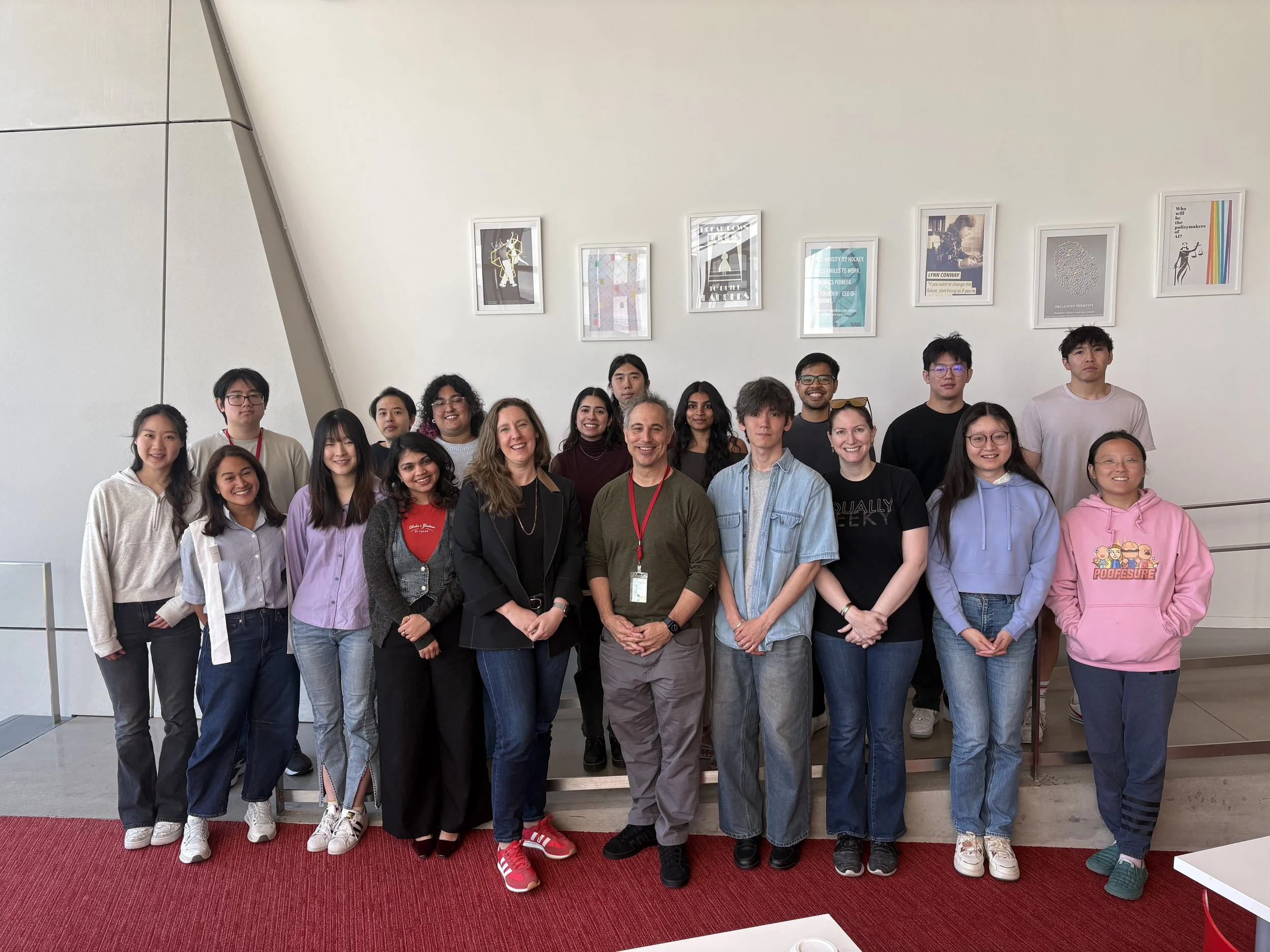
PiTech Impact Studio is Cornell Tech's practicum course dedicated to building technology in service of the public good. Working alongside nonprofits, city agencies, and social ventures, multidisciplinary teams of graduate students spend the Spring semester building technical products to serve their partners’ missions.
This year, co-instructors Matt Klein (Robin Hood Foundation) and Ariel Kennan (Beeck Center for Social Impact & Innovation) guided student teams through the full arc of the work: from scoping and stakeholder mapping, to prototyping, testing, and final handoff. Projects addressed family policing advocacy, workforce development, college course access, affordable housing policy, constituent services, homeless services navigation, family shelter operations, and food bank delivery logistics. All of the projects aimed to expand opportunity and address poverty in New York City and involved working closely with partner organizations to translate complex operational and policy challenges into tools that the organizations could incorporate into their workflow.

Leveraging Predictive Analytics to Support Emergency Operations in NYC - Part 2
New York City Emergency Management (NYCEM) is the primary city agency responsible for coordinating citywide planning and response to major emergencies that impact New Yorkers. These include unexpected incidents, such as major transit strikes or building collapses, as well as more common seasonal ones, like coastal storms and severe winter weather events. While NYCEM uses numerous data-driven tools to prepare for and respond to disasters, the agency is still exploring whether and how predictive tools may support their work.

Modeling Heat Pump Adoption, System Costs, and Bill Alignment Under Alternative Electricity Rates in New York
As a PiTech Rubinstein PhD Innovation Fellow, I worked on a project titled Modeling Heat Pump Adoption, System Costs, and Bill Alignment Under Alternative Electricity Rates in New York.

Designing an Analytical Workspace for Behavioral Intervention Plan Evaluation
As a PiTech Rubinstein PhD Innovation Fellow, I’ve been working over the past few months on a project centered on AI usage in behavioral intervention work: “How can we support Behavioral Intervention Specialists (BISs) in making sense of diverse, complex behavioral data when evaluating support plans for individuals with Intellectual/Developmental Disability (I/DD)?”

Nudges to High-Performing High Schools: Reducing Information Gaps in NYC’s High School Application Process
As a Siegel PiTech PhD Impact Fellow with NYCPS, I designed an informational intervention to target students from middle schools that have not historically sent many students to the highest performing high schools, helping them discover high-performing, nearby high schools where they have a strong chance of admission.

Understanding How New Yorkers Really Feel About City Services through 311 Satisfaction Data
How do New Yorkers feel about the services that city agencies provide in response to their 311 requests? To help answer this question, as a Siegel PiTech PhD Impact Fellow, I collaborated with the New York City Office of Technology and Innovation’s Office of Data Analytics to analyze data from the 311 Resolution Satisfaction Survey. We developed a unified framework that allows city agencies to measure and understand changes in customer satisfaction over time. This effort marks an important step toward improving how government agencies listen to and serve their residents.

Modeling Real Consumer Learning: How Households Adapt to Alternative Electricity Rates
As a Frederick and Susan Rubinstein PiTech PhD Impact Fellow this summer with Switchbox, I explored whether policy interventions in the form of varying electricity rates can push EHP adoption from current levels to targets needed for decarbonization. For this, I developed a building-level consumer behavior modeling framework that goes beyond traditional economic assumptions of utility-maximizing behaviour to capture how real families adapt to rate signals through experience and learning.

Empowering NYC Tenants to Navigate Housing Laws with LLMs
Navigating NYC housing laws can be very challenging for tenants, especially when facing potential eviction and housing insecurity. Oftentimes, the question is not “am I protected by Good Cause Eviction”, but “I have not heard of Good Cause Eviction. What does it have to do with me?”. That’s why, this summer, I worked with Justfix as a Siegel PiTech PhD Impact Fellow, to find out if they could utilize LLMs to build chatbot-like tools to help the tenants know their rights and what actions to take to assert those rights.

Evaluating Machine Translation for Municipal Use Cases
As a Siegel PiTech PhD Impact Fellow this summer, I worked with the Research and Collaboration team at the New York City Office of Technology and Innovation (OTI) to develop a practical framework for assessing machine translation. Even though a wealth of academic research exists on the subject of machine translation quality evaluation (MTQE), it does not necessarily translate well (pun intended) into practical settings such as the City’s use cases.

The Bike Lane Not Taken: Towards Building a Bike Demand Model from Large-Scale GPS E-Bike Data
I worked alongside the DOT to build bike demand estimates that leverage large-scale cycling GPS trace data. Specifically, we used data from CitiBike–New York City’s bike rideshare system.

Exploring LLM Summarization Techniques to Make Community Board Meetings More Accessible
As a Siegel Family Endowment PiTech PhD Impact Fellow, I worked with the Block Party team to improve the quality, clarity, and usability of their meeting summaries.

Leveraging Predictive Analytics to Support Emergency Operations in NYC
As a Rubinstein PiTech PhD Impact Fellow, I worked with NYCEM’s Office of Strategic Operations to improve preparedness and response efforts using machine learning.

Simulating patron behavior to understand how people use the New York Public Library
As a Siegel PiTech PhD Impact Fellow working with NYPL this summer, I used an Agent-Based Model (ABM) simulation as a data-centric approach to modeling community use patterns of a library.

Automating Noise Pollution Enforcement: Using AI to Streamline NYC's Noise Camera Enforcement Program
As a Siegel PiTech PhD Impact Fellow, I explored how AI could streamline NYC's Noise Camera Enforcement Program, which manually reviews thousands of noise violation recordings each month.

Early Emergency Detection and Project Risk Prediction for NYCHA
As a PiTech PhD Impact Fellow this summer, I worked on two data-driven projects with the New York City Housing Authority (NYCHA), both aimed at improving the safety and resilience of their large portfolio of buildings. NYCHA manages hundreds of developments across the city, many of which face aging infrastructure and growing maintenance challenges